The construction industry plays an important role in developing modern cities, roads, bridges, commercial buildings, and residential communities. As construction projects become larger and more complex, the demand for reliable machinery and advanced equipment continues to increase. Construction companies need dependable machines that can handle demanding tasks, improve productivity, and support workers throughout different stages of a project.
Modern construction equipment has transformed how contractors approach their work. Tasks that once required significant manual effort can now be completed more efficiently with specialized machinery. From excavation and material transportation to lifting heavy loads and preparing construction sites, the right equipment makes a major difference in project performance.
Teckaya construction equipment is a useful topic when exploring the importance of machinery in today’s construction environment. Understanding different equipment categories, their applications, and their benefits can help contractors, project managers, and construction professionals make better decisions. Choosing suitable machinery is not simply about purchasing powerful machines; it is about finding equipment that matches project requirements, operational conditions, and long-term business goals.
1. Understanding the Importance of Construction Equipment
Construction equipment refers to the machines, tools, and mechanical systems used to complete building, infrastructure, and development projects. These machines help workers perform activities that would otherwise require considerable time, physical effort, and additional labor.
Equipment plays an essential role in almost every construction phase. Before building work begins, machinery is needed to clear land, remove unwanted materials, and prepare the ground. During construction, specialized machines support excavation, transportation, lifting, and structural development.
The importance of construction machinery can be understood through several advantages:
- Improved productivity: Machines help complete repetitive and demanding tasks more efficiently.
- Reduced manual workload: Heavy equipment handles many physically demanding activities.
- Better project organization: Specialized machinery helps contractors coordinate different construction operations.
- Consistent performance: Properly maintained equipment can deliver dependable results.
- Greater project capacity: Contractors can undertake projects that require larger-scale operations.
Selecting suitable machinery allows construction companies to organize their resources and complete projects according to their planned schedules.
2. Different Types of Construction Equipment Used on Job Sites
Construction projects require different machines depending on their size, location, and technical requirements. Each equipment category has a particular purpose, making it important to understand the available options.
Excavators
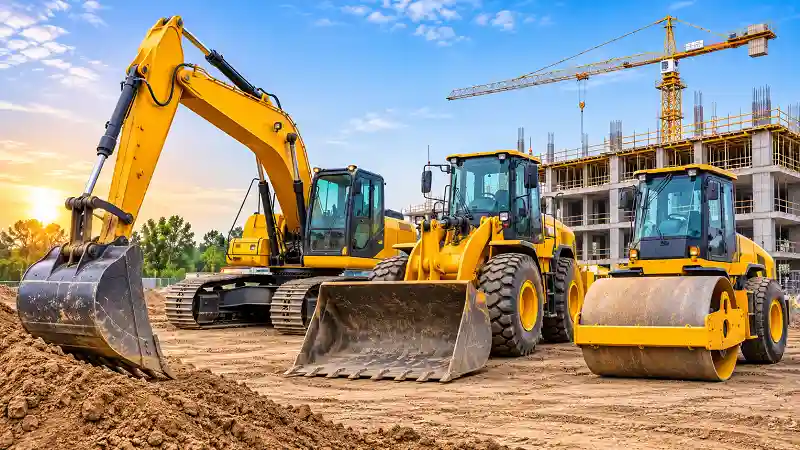
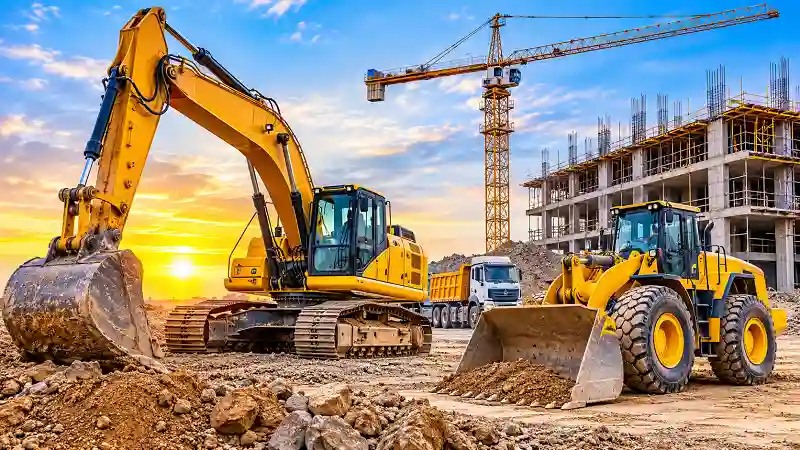
Excavators are among the most widely used machines in the construction industry. They are designed primarily for digging, trenching, removing soil, and handling materials. Their rotating upper structure and hydraulic operating systems allow them to perform various tasks.
Excavators are commonly used for foundation preparation, road construction, landscaping, and demolition-related activities. Different attachments can also expand their functionality.
Bulldozers
Bulldozers are powerful machines equipped with large front blades. They are mainly used for pushing soil, clearing land, leveling surfaces, and moving loose materials.
These machines are particularly useful during the early stages of construction when a site needs preparation before other activities can begin.
Wheel Loaders
Wheel loaders are designed to collect, lift, and transport materials over relatively short distances. They commonly handle sand, gravel, soil, and other construction materials.
Their versatility makes them valuable for construction sites, warehouses, material yards, and infrastructure projects.
Cranes
Cranes are essential for lifting and positioning heavy materials at construction sites. They are commonly used when working on tall buildings, bridges, industrial facilities, and large infrastructure developments.
Different crane designs are available for different lifting requirements and site conditions.
Dump Trucks
Dump trucks transport construction materials such as soil, gravel, sand, and debris. Their tipping bodies make unloading easier, supporting material transportation throughout a project.
Understanding these equipment categories helps contractors select machines that match their operational needs.
3. How Modern Construction Machinery Improves Productivity
Productivity is one of the most important considerations in construction management. Projects involve multiple activities that must be completed in a planned sequence. Delays in one stage can affect the entire schedule.
Modern machinery helps improve productivity by supporting faster material movement, more efficient excavation, and better coordination between workers and equipment operators.
For example, an excavator can complete substantial digging work more efficiently than manual methods. Similarly, wheel loaders can move large quantities of material, helping other construction activities continue without unnecessary interruptions.
Another advantage is the ability to use specialized attachments. Depending on the machine and manufacturer specifications, attachments may support digging, lifting, breaking, grading, or material handling.
When selecting Teckaya construction equipment, contractors should consider how each machine contributes to their overall workflow. Equipment should support actual project requirements rather than simply offer features that may never be needed.
4. Important Factors to Consider Before Choosing Construction Equipment
Purchasing construction machinery requires careful planning. Equipment represents a significant investment, and selecting an unsuitable machine can create unnecessary operational expenses.
Before making a decision, construction companies should evaluate several important factors.
Project Requirements
The first consideration is the type of work involved. A road construction project may require graders, rollers, and dump trucks, while a commercial building project may depend more heavily on cranes, excavators, and lifting equipment.
Understanding project requirements helps narrow down suitable options.
Machine Capacity
Every machine has specific operating limits. Contractors should consider lifting capacity, operating weight, digging depth, loading capacity, and other relevant specifications.
Selecting equipment with appropriate capacity helps maintain efficient operations.
Fuel Efficiency
Fuel consumption affects the overall cost of operating construction machinery. Companies should compare expected fuel requirements and consider how frequently the equipment will be used.
Fuel-efficient machinery may help reduce operating expenses over time.
Maintenance Requirements
Regular servicing is essential for reliable equipment performance. Before purchasing a machine, contractors should understand its maintenance schedule, replacement parts, service requirements, and manufacturer recommendations.
Budget Considerations
The purchase price is only one part of equipment ownership. Insurance, transportation, maintenance, fuel, storage, and operator training can also contribute to the total cost.
A complete budget helps businesses make more informed investment decisions.
5. The Role of Technology in Modern Construction Equipment
Technology has significantly changed the construction equipment industry. Modern machines increasingly incorporate digital systems and advanced features that support equipment monitoring, operating accuracy, and project management.
Some machines include GPS-based positioning systems that help operators work according to planned measurements. Other equipment may offer telematics features that provide information about machine location, operating hours, fuel consumption, and maintenance requirements.
Digital monitoring can help construction managers understand how equipment is being used. This information may support better scheduling and maintenance planning.
Automation is another developing area. Certain construction machines include assistance systems that help operators perform repetitive tasks with greater consistency. However, trained operators and appropriate supervision remain essential.
As technology continues to develop, construction businesses can expect further improvements in equipment monitoring, connectivity, and operational efficiency.
6. Construction Equipment Safety and Operator Training
Safety should always be a major priority on construction sites. Heavy machinery can create risks when it is operated incorrectly, poorly maintained, or used in unsuitable conditions.
Construction companies should establish clear safety procedures and ensure that workers understand their responsibilities.
Operator training is particularly important. Workers should receive appropriate instruction before operating specialized machinery. They must understand machine controls, operating limits, site conditions, and emergency procedures.
Regular equipment inspections can also help identify potential problems before they affect operations.
Important safety practices include:
- Inspecting machinery before operation.
- Following manufacturer operating instructions.
- Using appropriate protective equipment.
- Keeping unauthorized workers away from operating areas.
- Maintaining clear communication between operators and ground workers.
- Scheduling regular equipment servicing.
- Following site-specific safety procedures.
Proper training and responsible equipment management help create a safer working environment for everyone involved.
7. The Importance of Equipment Maintenance and Regular Inspections
Construction machinery operates in demanding environments where dust, vibration, heavy loads, and changing weather conditions can affect performance.
Without regular maintenance, small mechanical problems may develop into more serious equipment issues. Unexpected breakdowns can interrupt construction activities and increase repair costs.
Preventive maintenance helps companies identify potential problems early. Maintenance schedules should follow manufacturer recommendations and account for operating hours and working conditions.
Common maintenance activities include checking engine oil, inspecting hydraulic systems, examining tires or tracks, cleaning filters, and monitoring essential machine components.
Equipment operators should also report unusual sounds, warning indicators, or changes in machine performance.
Keeping accurate service records provides useful information about repair history, operating costs, and future maintenance requirements.
A well-maintained machine is more likely to deliver consistent performance and support long-term construction operations.
8. Benefits of Choosing Reliable Construction Equipment
Reliable equipment provides several advantages for contractors and construction businesses. Machinery that meets project requirements and receives proper maintenance can support efficient operations over an extended period.
One major benefit is operational consistency. When machines perform as expected, project managers can organize work more effectively and reduce unnecessary interruptions.
Another benefit is cost management. Although dependable equipment may require a higher initial investment, its long-term value can be greater when maintenance, fuel consumption, and expected service life are considered.
Reliable machinery can also support better resource management. Contractors can coordinate labor, materials, and equipment according to project schedules.
Teckaya construction equipment can be considered within this broader discussion of equipment selection and construction machinery needs. Businesses should always review available specifications, service arrangements, safety information, and supplier details before making purchasing decisions.
9. Construction Equipment and Environmental Responsibility
Environmental responsibility has become an increasingly important part of the construction industry. Companies are looking for ways to reduce unnecessary fuel consumption, control emissions, and manage construction waste more effectively.
Equipment selection can contribute to these goals. Modern engines may offer improved fuel efficiency and lower emissions compared with older technologies, depending on the machine and applicable standards.
Proper maintenance also supports environmental performance. Machines with well-maintained engines and hydraulic systems are less likely to experience avoidable leaks or inefficient operation.
Construction businesses can also improve environmental practices by:
- Avoiding unnecessary machine idling.
- Choosing equipment appropriate for each task.
- Maintaining engines and hydraulic systems.
- Following proper waste-management procedures.
- Considering lower-emission equipment where suitable.
- Planning transportation routes efficiently.
These practices can help construction companies balance operational requirements with environmental responsibilities.
10. The Future of the Construction Equipment Industry
The future of construction machinery will likely be shaped by technological innovation, environmental priorities, and changing infrastructure requirements.
Electric construction equipment is receiving increasing attention, particularly for applications where charging facilities and operating conditions make it practical. Hybrid systems are another area of development.
Artificial intelligence and connected equipment technologies may also improve construction planning and machine monitoring. These developments can help companies identify maintenance needs, monitor productivity, and organize equipment utilization.
Remote monitoring and automation may become more common as manufacturers continue improving digital systems. Nevertheless, skilled workers, trained operators, and responsible management will remain important parts of successful construction projects.
Companies that understand these developments can make more informed decisions when upgrading their equipment and planning future investments.
Conclusion
Construction equipment is essential to modern infrastructure development, building projects, and industrial operations. Different machines perform specialized tasks, from excavation and material transportation to lifting, grading, and site preparation. Choosing suitable machinery helps contractors improve productivity, organize resources, and manage project expenses.
Teckaya construction equipment is a relevant subject for businesses and professionals exploring the importance of reliable machinery in today’s construction industry. By considering equipment capacity, fuel efficiency, maintenance requirements, safety standards, and technological features, construction companies can make better investment decisions.
Ultimately, successful equipment management involves more than purchasing machinery. It requires proper planning, regular inspections, trained operators, and responsible operating practices. As construction technology continues to evolve, businesses that prioritize equipment quality and efficient management will be better prepared to meet the demands of future projects.visit lovelaloblog.